" height="39.61165048543689px" id="ZNWWQDUsB" transform="translate(0 0.195)" width="39.79498837473122px"/><path d="M 14.36 13.33 C 15.643 13.33 16.374 11.864 15.601 10.841 L 7.888 0.619 C 7.048 -0.494 5.28 -0.022 5.107 1.362 L 4.627 5.196 C 4.496 6.248 4.009 7.224 3.248 7.963 L 0.475 10.653 C -0.526 11.624 0.161 13.32 1.555 13.321 Z" fill="rgb(255, 87, 199)" height="13.329661963960334px" id="BFIxPoook" transform="translate(3.344 8.474)" width="15.91740701520282px"/></svg>)

The AEC industry has spent decades optimizing for the jobs of teams operating in contractual silos. Parametric tools that help you iterate design in real time. Generative design that produces layout options in seconds. We've gotten remarkably good at reaching a design vision quickly.
But reaching a design vision is a partial solution. Design intent describes what a building could (or should) be. It doesn't describe how it actually gets built on-budget, what happens when assumptions meet site conditions, or whether the construction systems can be procured at the time the owner needs. Between what gets designed and what gets constructed, there is a wall. Every person who has ever worked on a building project knows it's there.
Technology has never brought design and construction together. More fundamentally, it was never capable of fusing these two perspectives, design and construction, into one shared reality.
It’s not as if we haven't tried - every generation of tools solved one dimension of this problem while leaving the wall intact.
CAD digitized the drafting table. It gave us precision and speed but the project didn’t get “smarter”
BIM added smart modeling. Models carried data: materials, dimensions, quantities. But the reality of construction (cost, schedule, procurement etc.) lived elsewhere
Cloud tools promised to fix this by putting teams in the same design model. But co-working in a single source of truth is not the same as sharing a live understanding of what can actually be built, what it costs, and how it gets constructed
And now AI is entering the industry. For the most part, it's entering the same way every other technology has: bolted onto tools that aren’t addressing the root issue.The pattern is familiar. A new technology arrives. It gets grafted onto the old architecture, not much changes.
So after decades of tools that each solve one dimension, two fundamental problems remain unsolved. Design intent is still disconnected from construction reality. And we still lack an authoring environment that all disciplines can leverage with the most powerful tools arriving right now.
Humans and agents, building together
Here's the future we see playing out. And it's closer than most people think.
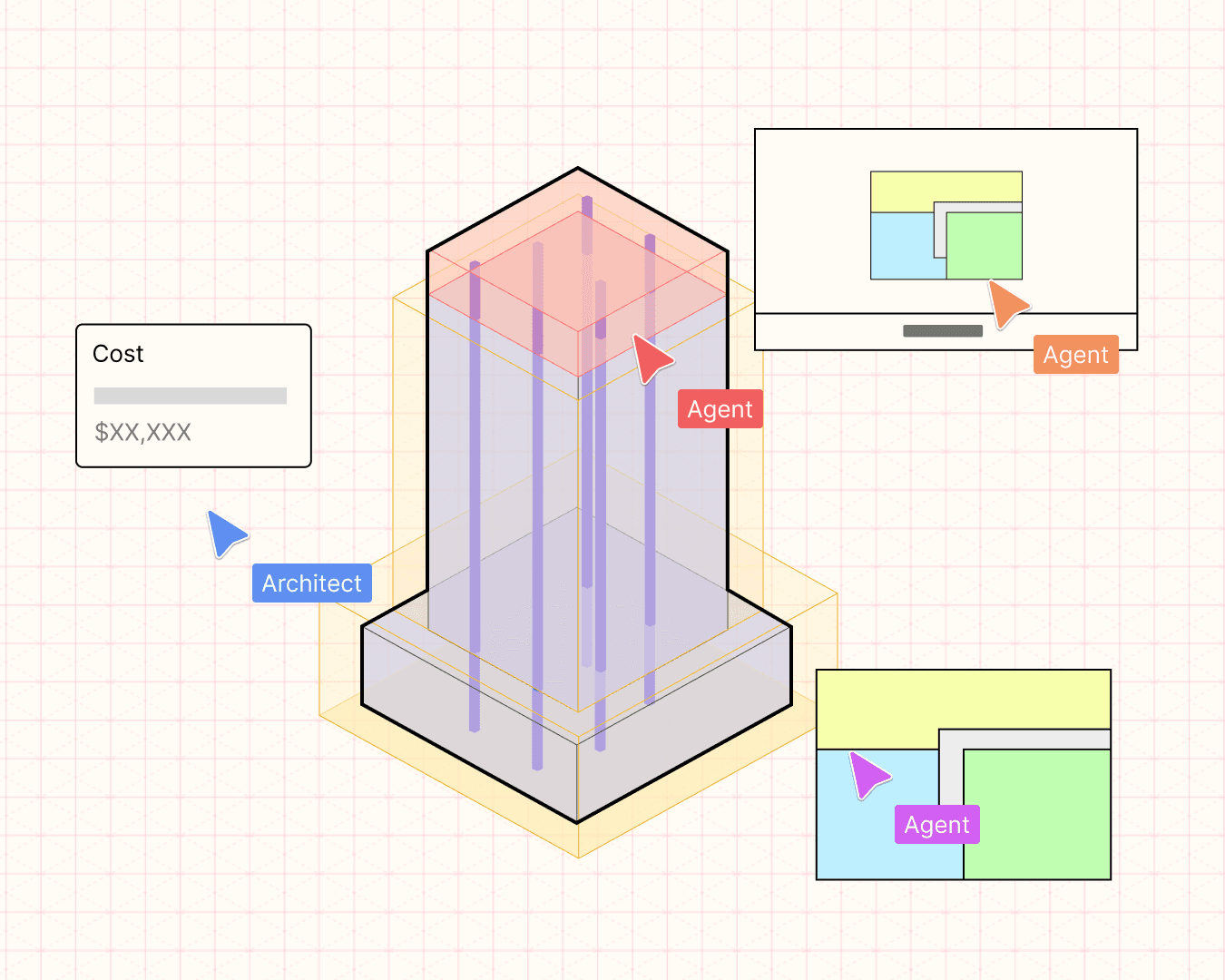
You're an architect exploring a design change. You adjust the massing and takeoffs update live. The cost model responds in kind. You invoke your GC's constructability agent, purpose-built by that contractor's preconstruction team, to pressure-test the design. The agent flags a detail that will blow the schedule by three weeks. You adjust. The cost recalculates. A structural engineer and their agent joins your project to review all of this in real time.
Humans and agents working together to build buildings. Not humans replaced by agents. Not agents bolted onto the side as glorified search bars. Architects, engineers, contractors, and owners, each with their own agents built from their own expertise, all operating inside the same live model.
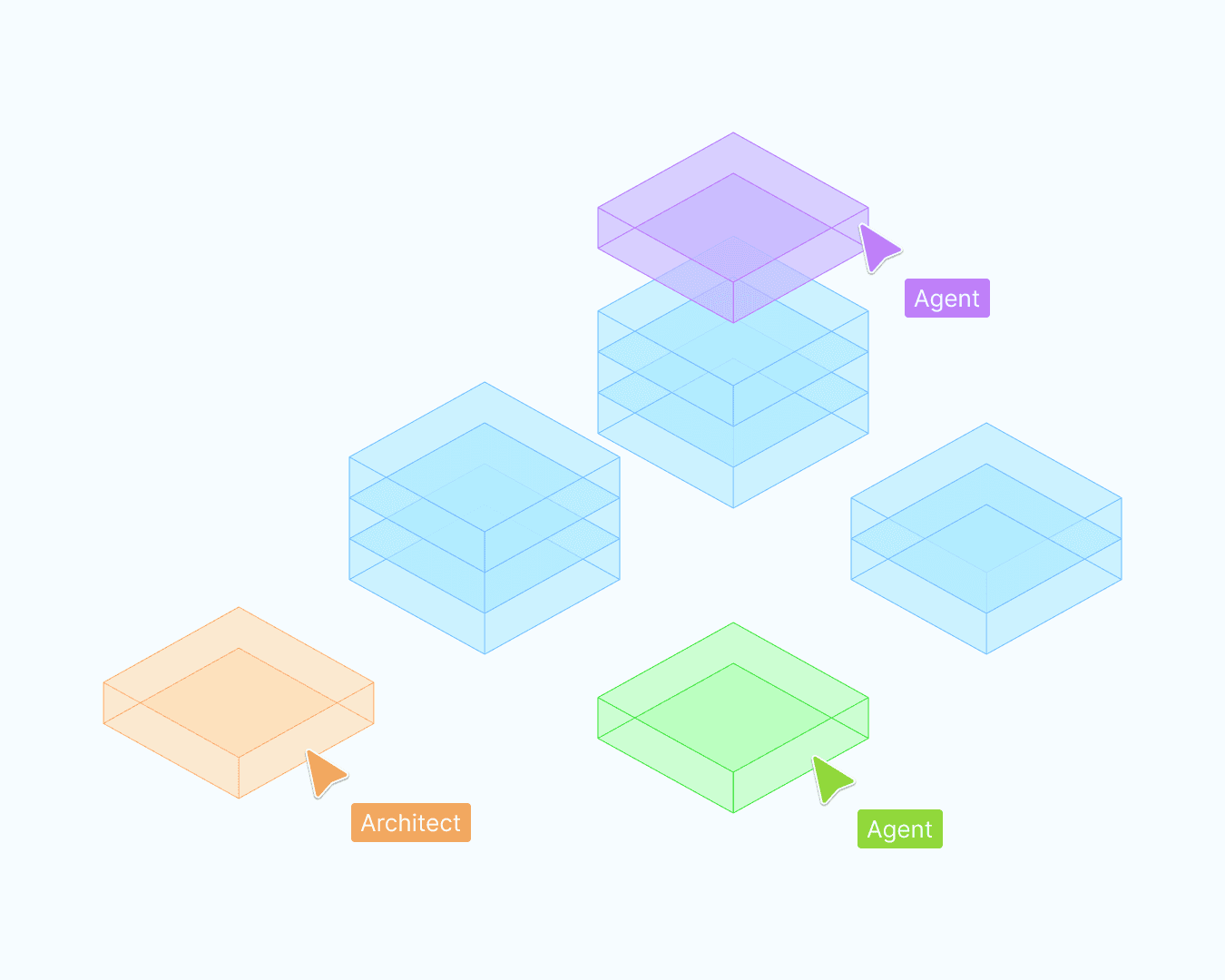
This is what we call Connected Constructible Design. A shared environment where every discipline, human and agent, has a clear line of sight into the design, the cost and the constructability of what’s being built.
The north face of the Eiger
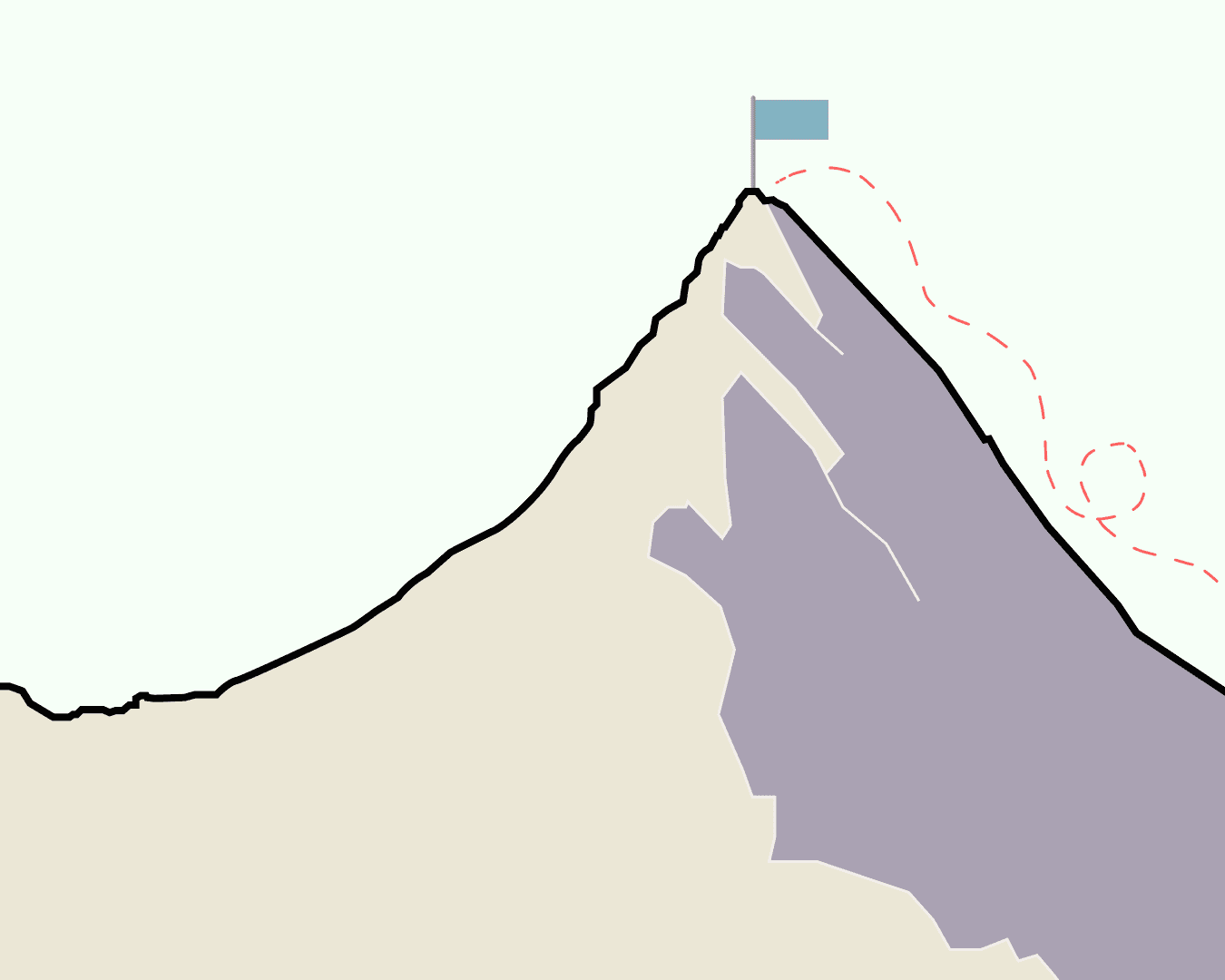
Building this is the hardest problem in AEC software. As Martyn Day put it, someone has to climb the north face of the Eiger.
Our approach comes down to two things.
Deliver value today. No one cares about what you will do tomorrow if you can’t deliver value today.
Today, Arcol is the fastest, most intuitive, and most collaborative building design environment available. It works the way modern software should work: in the browser, in real time, with your team. That foundation is solid and it's proven. Mortenson is shaping their design process around Arcol. Gorman & Company is saving dozens of hours per week. Warren & Mahoney has completely changed how their teams approach projects using Arcol.
Be all in on Connected Constructible Design. Everything else is noise.
Connected Constructible Design is what happens when you build a platform around two core ideas: construction intelligence embedded in every design decision, and an agent-ready architecture that lets humans and AI collaborate across disciplines in real time.
We’re making this possible based on a few core tenets:
Agent-ready from the ground up. The most important architectural decisions were made four years ago. Arcol's data model is built so that AI agents can read, reason about, and act on the live model. The agents we are building are first-class participants in the design environment. This is what unlocks the possibility for anyone to build agents that plug directly into Arcol and contribute their expertise in real time. The platform doesn't just tolerate agents. It was designed for them.
Constructible from the first iteration. Every design decision is influenced by construction intelligence before it’s made. It’s not just the building form and space plan, but the constraints and costs of the systems required to operate it. You're not designing and then handing off to someone who checks whether it can be built. The design environment itself understands construction: sequencing, feasibility, system selection, constructability.
Connected across every discipline. Being browser based from day one allowed us to build Arcol around collaboration: Architects, engineers, contractors, and owners working in the same living model. And as agents join that model alongside humans, "connected" stops meaning "same file" and starts meaning "shared intelligence."
Putting all our focus on these two priorities, in this order, is how we build something that has never existed in AEC.
Why Now
When I started Arcol, Connected Constructible Design was part of the vision, but I saw it as far away. The priority was building real-time collaboration in a modeling environment. Getting teams into the same model, working together, in the browser. That alone was a hard enough problem to solve.
As we built this foundation though, the possibility of what’s possible has changed dramatically.
Six months ago, the idea of a preconstruction team building an agent that plugs into a live model to pressure-test constructability in real time would have sounded like a multi-year roadmap item. Today, the underlying capabilities exist. The models are good enough. The reasoning is good enough. The tool-use capabilities are good enough. What's moving slowly isn't the technology. It's the platforms.
The question is no longer whether agents will reshape how buildings get designed and built. It's which platforms are architecturally ready to support it.
Arcol was built from the ground up for this moment. Browser-native. Multiplayer at the core. A data model that AI can read, reason about, and act on in real time. Agent-ready by design.
The Road Ahead
The separation between design and construction isn't just a technology gap - it’s a cultural one. There is almost no precedent for design and construction sharing the same environment in real time. Resistance to change in this industry is not a risk. It's a certainty.
But the agentic wave isn't waiting for the industry to be ready. Every other industry is being reshaped by AI agents right now. Finance. Healthcare. Manufacturing. AEC will be no different. The firms and the platforms that embrace this shift first will define how buildings get designed and built for a generation.
The future of building design isn't a better tool for architects. It's a shared environment where humans and agents from every discipline work together to design buildings that can actually get built. Every idea. Every discipline. Every decision. Flowing through reality.