" height="39.61165048543689px" id="ZNWWQDUsB" transform="translate(0 0.195)" width="39.79498837473122px"/><path d="M 14.36 13.33 C 15.643 13.33 16.374 11.864 15.601 10.841 L 7.888 0.619 C 7.048 -0.494 5.28 -0.022 5.107 1.362 L 4.627 5.196 C 4.496 6.248 4.009 7.224 3.248 7.963 L 0.475 10.653 C -0.526 11.624 0.161 13.32 1.555 13.321 Z" fill="rgb(255, 87, 199)" height="13.329661963960334px" id="BFIxPoook" transform="translate(3.344 8.474)" width="15.91740701520282px"/></svg>)
Designing What’s Next: A spotlight on what it looks like when modern AEC principles are put into practice.
At Arcol, we spend a lot of time talking about what the future of AEC *should* look like: more collaborative, more iterative, more connected to real business outcomes.
What is most inspiring to us though, is seeing those ideas applied in the real world.
WAM didn’t arrive at these principles because of Arcol. They’ve long been a leading voice of innovation in AEC with a strong culture of collaboration, a willingness to question established workflows, and a focus on improving how work actually gets done.
Partnering with WAM we were able to help them supercharge those principles. Ideas that had previously been constrained by tools, process, or friction suddenly had the space to scale across projects and teams.
Technology as a strategic lever within Firm practice
Technology leadership in AEC used to mean keeping standards aligned and models coordinated. That bar has been raised. Today, digital leaders are redefining how firms create value, win work, and build resilience for their practice.
At WAM, this shift shows up clearly in how leadership approaches technology as a strategic lever, not just operational support. That new wave is embodied by its leaders:
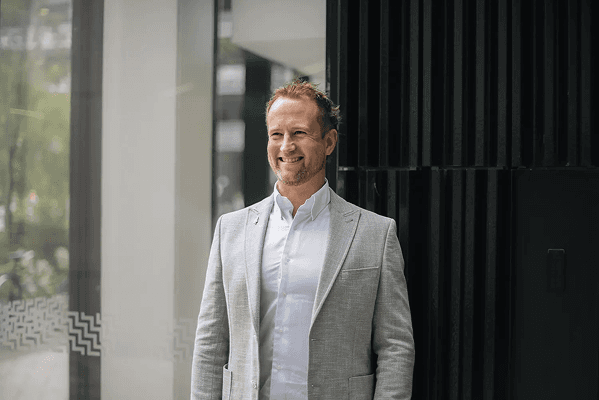 Brad Sara | Principal |
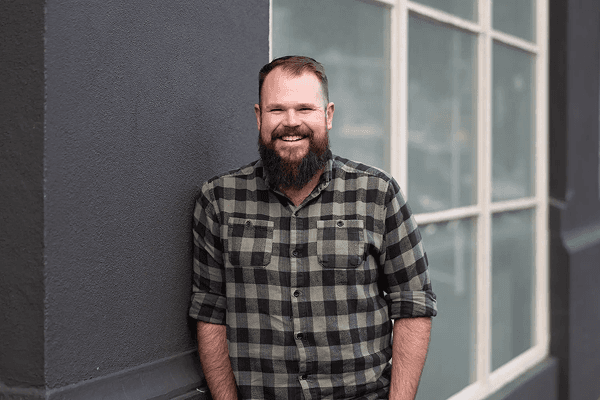 Anton Shaw | Senior Associate |
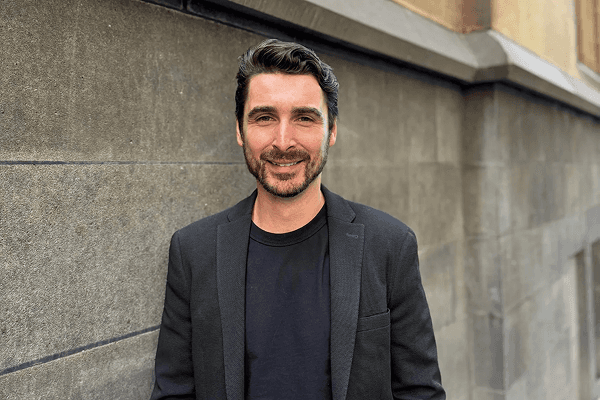 Gary Henighen | Principal |
Their approach shows how technology leadership is evolving: from back-of-house support to front-of-house visibility, client engagement, and strategic growth.
Innovation in Practice: From Singleplayer to Multiplayer
Collaboration has been an industry talking point for years. WAM made it operational.
“We used to do one tool for modeling and metrics. All of these tools are singleplayer, file-based, on a server, on someone’s desktop and if that person leaves we lose everything. Once you realize this the choice to evolve is simple.
Arcol being on the browser just brings the inherent collaboration of our practices into a software that actually supports working like this. The value of that being in one place at the start of the project compounds at every step of the process and minimizes risk."
- Anton Shaw
By moving to true multiplayer design, WAM has turned collaboration from a talking point into a lived reality - reducing risk, accelerating iteration, and unlocking new ways to work together.
Outcomes: How Live Density Testing Became a Competitive Advantage
“The shift from static design development to live, iterative density testing has become a genuine game changer in how we work with clients.”
- Gary Henighen
Gary went on to describe how the team’s approach has changed. Rather than working through feasibility in isolation and presenting fixed outcomes, the team can now test yield, massing, and planning scenarios in real time, often with clients in the room. This has become a powerful collaboration tool, building confidence and enabling faster, clearer decision-making.
He noted that in the current NSW regulatory environment, where planning controls and policy settings are continually shifting, this speed and clarity matters more than ever. WAM is able to quickly test LMR outcomes, affordable housing provisions, and HDA pathways across multiple scenarios, iterating live and with accuracy.
What previously took days or weeks of back-and-forth can now be interrogated in minutes, allowing teams and clients to understand the implications of each planning route as it is being explored.
Gary added that this rapid workflow also allows the team to layer in environmental constraints early, testing how density responds to context, access, overshadowing, and site limitations in a structured way. The outcome is not just faster feasibility, but better-informed design arguments — grounded in evidence, tested iteratively, and aligned to planning strategy from the outset.
The result is a more confident client, clearer alignment on risk and opportunity, and a shared understanding of how to deliver better public outcomes and robust project feasibilities — achieving density done well.
“The rapid feasibility workflow our team was able to achieve with Arcol has been a game changer, enabling us to test density scenarios live with clients, move quickly through planning options, and build confidence in decision-making through a more iterative and collaborative process.”
- Gary Henighen
Innovation in Practice: Building Design Systems
One of the biggest areas of focus at WAM is to take the wins they find and make them repeatable advantages. In software, design systems have become an essential way to scale creativity and consistency. WAM is bringing this thinking into architecture.
“We have begun to think about building up a library of assets in Arcol. Over time we are just creating a more and more valuable resource and the project insights, metrics and designs are future assets for the team”
- Anton Shaw
This is a compounding strategy. Every project adds to the library. Every set of metrics becomes a reference point for the next feasibility study. Every design decision feeds a growing body of institutional knowledge that makes the firm smarter over time, not just busier.
“With the possibilities of AI when it comes to interpreting our data it’s critical that we structure our work in a way that allows us to take advantage of this”
- Brad Sara
The Bigger Picture
WAM's story isn't about adopting new software. It's about a firm with critical thinkers at every level who are focused on how projects are won, designed, and delivered.
Multiplayer design reduced their risk exposure. Client-facing collaboration helped win work. A design systems approach is turning every project into an investment in the next one.
We’re proud to be partners in that journey and happy to keep being pushed to keep building tools that make this kind of innovation possible.